Skip to content
farAlpha

AI agents that take hours off your payroll, live in under 60 days.

We build AI systems that reach production and stay there. Not demos. So far that is $2.5M of work taken off client payrolls.

Thirty-minute audit call with the architect who would run the work. No deck, no commitment.

Taken off client payrolls in hours our agents now cover
$2.5MTaken off client payrolls in hours our agents now cover
Hours a year handed back to the teams we build for
10K+Hours a year handed back to the teams we build for
Typical time from technical brief to a system in production
60 daysTypical time from technical brief to a system in production
Years shipping systems that stayed shipped
14+Years shipping systems that stayed shipped

Teams our engineers have shipped for

  • Microsoft logo
  • AWS logo
  • Adobe logo
  • Pepsi logo

and product teams atThe Sun MotorsSnowcellMotorsales.aiRecrew

What it takes to get past the demo.

A pilot stalls because one of these six is missing, not because somebody picked the wrong model. All six come from one team that has been doing full-stack, cloud, and DevOps work together for more than fourteen years, so nothing gets thrown over a wall and nothing arrives half owned.

AI systems that survive review

Retrieval over your own documents, agents that call real tools, and models tuned to your domain. Every build ships with an evaluation harness, so quality is a number your reviewers can check rather than a claim you have to defend in a meeting.

  • Retrieval
  • Agents
  • Evaluation
  • Fine-tuning

Product engineering

The application around the model. Typed APIs, a real design system, and a front end people are willing to open every day, on web and on mobile.

  • Web
  • Mobile
  • Design systems

Data and ML platform

Ingestion, feature stores, training pipelines, and deployments you can reproduce six months later. The unglamorous layer that decides whether any of this is still standing.

  • Pipelines
  • MLOps
  • Lineage

Cloud and infrastructure

Built for the load spike, not for demo day. Capacity planning, failover, and a cost line that does not ambush your finance team the month usage triples.

  • Kubernetes
  • Cost control
  • GPU capacity

Modernisation and integration

Systems that cannot go down, moved forward in increments. We work alongside the estate you already have instead of asking for a rewrite.

  • Incremental migration
  • Legacy integration

Security and assurance

Access control, audit trails, and red-team passes, plus the evidence pack your security reviewer or your regulator asks for before anything goes live.

  • Red-teaming
  • Audit trails
  • Access control

Enterprise rigour at startup speed.

By 2026 almost anyone can build something that works on stage. Far fewer can build something that survives a load spike, a security review, and half a year of ordinary Tuesdays. That second half is the actual work, and it is the half we are built for.

How it usually goes

How we do it

The demo is the deliverable

Production is the definition of done

Partners sell the work, juniors deliver it

The engineers on the first call are the engineers on the code

Strategy decks and maturity models

Working software, measured against your own data

Handover is a slide deck and a Slack channel

Runbooks, alerting, and a named owner, so it still works in six months

Lock-in designed into the architecture

Your repository, your cloud, your weights, handed over in full

Four phases, with a decision gate after each one.

You can stop after any phase and keep everything produced up to that point. The gates keep your spend tied to evidence, and they keep us honest about what is actually working rather than what demos well.

  1. 1 to 2 weeks

    Frame

    We interrogate the problem before proposing a solution, including whether AI is the right instrument at all.

    What you walk away with

    • Technical brief and solution architecture
    • Data readiness and feasibility assessment
    • Success metrics agreed with the budget holder
  2. 4 to 6 weeks

    Prove

    A working system running against your real data, scored on an evaluation harness rather than a demo script.

    What you walk away with

    • A working build running on production-shaped data
    • Evaluation suite and a measured baseline
    • A written go or no-go recommendation
  3. 6 to 12 weeks

    Harden

    The engineering that separates a demo from something your business can lean on every day, and that a reviewer can sign off.

    What you walk away with

    • Infrastructure, CI/CD, and observability
    • Security review, access control, audit logging
    • Load, cost, and failure-mode testing
  4. Ongoing

    Operate and hand over

    We run it until your team is ready to, then hand it over completely. The test is whether it still works six months after we leave.

    What you walk away with

    • Service objectives, alerting, and on-call runbooks
    • Retraining and drift monitoring
    • Documentation and team enablement
Book a technical call

We will tell you if you do not need us. That happens more often than you would expect.

What teams actually call us about.

These are the sentences that open most first conversations. Nearly all of them come from a pilot that already works and still cannot ship.

Getting it into production

The demo works in a notebook and nowhere else.

We take the thing your team already proved and put a service around it, with an owner, a service objective, and a deployment pipeline behind it.

We have years of documents and nobody can find anything.

Retrieval across your archives that is permissioned, cited, and accurate enough that people stop keeping private copies and start getting the hours back.

The core system is old and nobody will touch it.

Incremental modernisation on a strangler-fig path. We work alongside what you have instead of demanding a rewrite.

Keeping it defensible once it is live

We cannot tell whether quality is getting worse.

Evaluation suites, drift detection, and regression gates in CI, so quality becomes a number on a dashboard instead of a complaint from a user.

Our AI spend is growing faster than the value it returns.

Model routing, caching, quantisation, and an honest build or buy call. Often the answer is a smaller model doing a narrower job.

Legal will not let us put this in front of customers.

Guardrails, audit trails, human review where it matters, and the evidence pack your reviewers need in order to sign off.

Selected work

Systems we shipped that are still running.

Publicly referenceable work, all of it live and carrying real traffic rather than sitting in a sandbox waiting for a decision. Engagements under NDA are available as named references on a call.

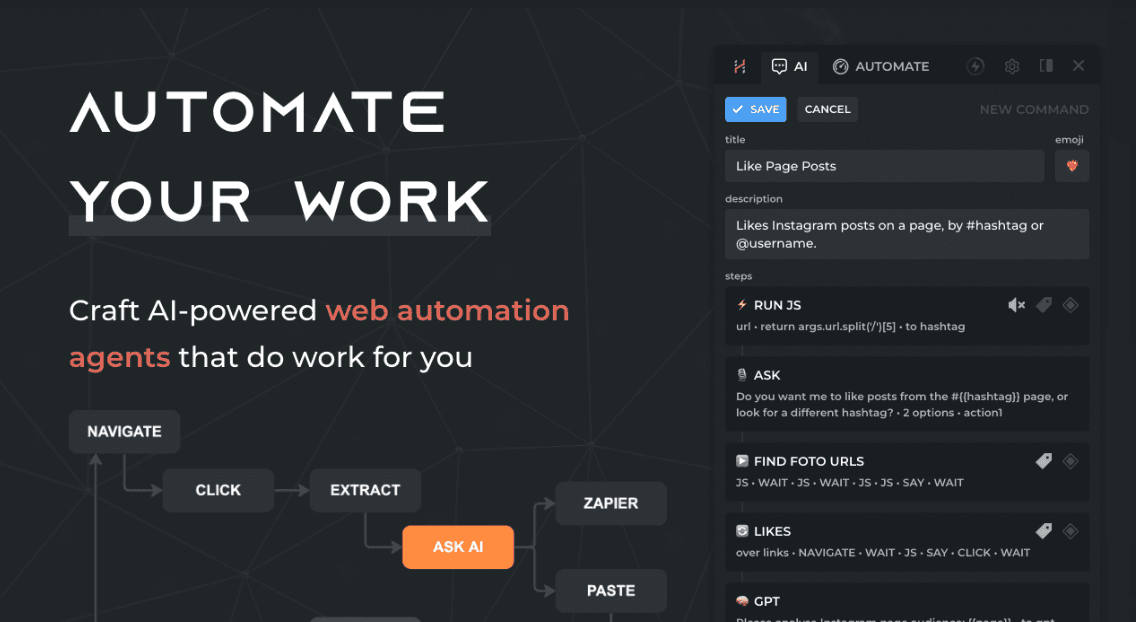
Automate.AI agent builder dashboard

Agentic automation

Automate.AI

An authoring environment for browser-operating agents. Runs are recorded and replayed deterministically, so a failing automation can be stepped through rather than guessed at, and a non-engineer can build one without opening a terminal.

  • Agent orchestration
  • Browser automation
  • Deterministic replay
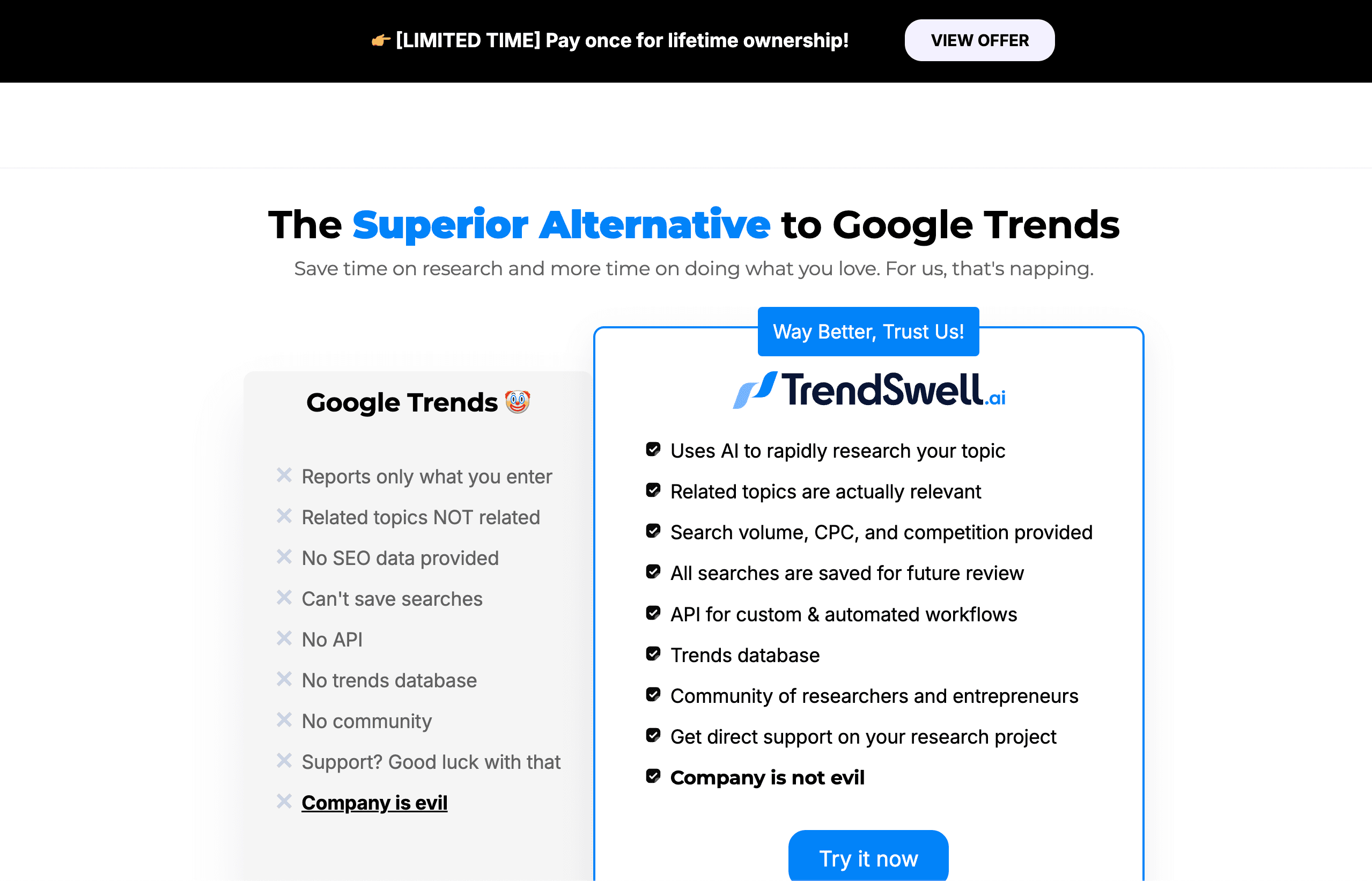
TrendSwell analytics dashboard

Market intelligence

TrendSwell

A research engine that ingests noisy public signals and resolves them into ranked trend reports you can trace back to a source.

  • Data pipelines
  • Ranking models
  • Analytics UI
Parliamo language coaching interface

Education

Parliamo

A language-learning app with real-time pronunciation scoring and feedback that adapts to the mistakes each learner keeps making.

  • Speech recognition
  • Adaptive scoring
  • Mobile

Engagements

Three ways to work with us.

There is no rate card, because scope drives cost and every stalled build is stuck for its own reason. We do commit to a number before work starts, and it holds.

Technical discovery

Fixed scope, 1 to 2 weeks

A senior architect and an engineer stress-test the problem and hand you an implementable plan, whether or not you build it with us.

  • Solution architecture, plus a build or buy call
  • Data readiness assessment
  • Costed delivery roadmap

Production Rescue

Named team, 3 to 9 months

Where most stalled pilots start

For a pilot that works and still cannot ship. A named architect and engineers take what your team already proved and build the half nobody scoped: deployment, evaluation, access control, audit trail, and the on-call rota that keeps it alive after we leave.

  • Named engineers, one fixed monthly rate
  • Short increments with a decision gate at each one
  • Full IP transfer, you keep the repository

Embedded engineering

Retained, rolling

Our engineers work inside your team and your process, to raise the bar on a platform you already run rather than to build a new one.

  • Works within your tooling and release process
  • Architecture review and enablement
  • Scale up or down each quarter
Book a technical call

Bring whatever you have, however rough. We will tell you which of these three fits and what it is likely to cost.

The questions that come up first.

If yours is not here, ask it on the call. We would rather answer it before you commit than after.

Working together

Usually because the demo was scoped and the production system was not. Deployment, evaluation, access control, audit logging, cost ceilings, and a named on-call owner are a separate body of work, and it is normally larger than the pilot itself. Closing that gap is what Production Rescue exists to do.

Ownership, environment, and compliance

Bring us the build that will not ship.

Thirty-minute audit call with an architect and an engineer. You leave with a straight answer on what stands between your build and production, what it costs to close that gap, and where it is most likely to go wrong. No deck, no discovery fee.